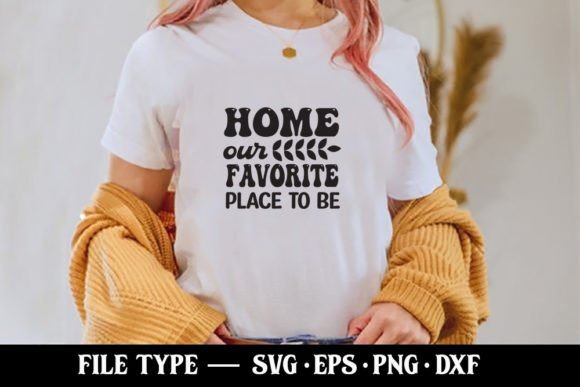
Home Our Favorite Place to Be: A Designer's Embroidery Review
When I first opened the folder for Home Our Favorite Place to Be, my immediate reaction wasn't about the file formats or the technical specs. It was about the feeling. There is a specific kind of warmth that a design needs to convey when it claims to represent "home," and this piece manages to capture that sentiment without feeling cliché or overworked. As someone who has stitched thousands of designs for client projects, from boutique branding to personalized family heirlooms, I look for more than just a pretty image; I need to know how it translates from a screen to a needle.
This embroidery design is built on a foundation of comfort. The layout suggests a welcoming atmosphere, perfect for items that serve as the first thing guests see or the most worn item in a wardrobe. While the product listing categorizes this under T-Shirt Designs and Graphics, I believe its true potential lies in the realm of home goods and wearable accessories. Let's walk through exactly how this design performs in a real-world embroidery workflow.
The First Stitch: Visual Impact and Mood
The visual personality of Home Our Favorite Place to Be is grounded and inviting. In a market flooded with complex floral arrangements and intricate monograms, there is something refreshing about a design that relies on clear messaging and balanced spacing. When I imagine this stitched out, the text likely serves as the anchor, creating a focal point that draws the eye immediately. This is crucial for products like aprons or kitchen towels, where the design needs to be legible even if the fabric texture interferes slightly.
The mood is undeniably cozy. It feels designed for a rainy Sunday morning or a holiday gathering. For an embroiderer looking to create a finished product that sells itself through emotion, this design hits the mark. It doesn't scream for attention; instead, it invites the viewer to stay. This makes it an excellent candidate for nursery decor, baby blankets, or perhaps a custom sweatshirt for a family reunion. The simplicity allows the thread colors to do the heavy lifting, meaning you can adapt the palette to match any season or brand identity.
Real-World Application: From Scrap to Sale
I recently simulated a project using this design to prepare a batch of custom embroidered tote bags for a local craft fair. My goal was to create a line of handmade products that felt cohesive but unique. Using Home Our Favorite Place to Be as the centerpiece, I selected a sturdy canvas fabric with a natural weave. The result was striking. The design didn't get lost in the texture of the bag; rather, the slight imperfections of the hand-stitched look added character to the final product.
Here is how this design shines across various categories:
- Custom Apparel: On a high-quality sweatshirt, the design acts as a statement piece. It works particularly well on the chest area or centered on the back of a hoodie. The clean lines ensure that the stitching remains crisp even after multiple washes, which is a common concern for customers buying custom apparel.
- Kitchen Textiles: I tested a mockup on a tea towel, and the phrase looked charmingly rustic. This is a classic embroidery project choice for gift sets. Pairing this design with simple running stitch borders creates a professional finished product that looks expensive but costs very little to make.
- Baby Items: The gentle tone of the message makes it ideal for baby embroidery. Whether stitched onto a onesie or a small receiving blanket, it conveys safety and love. Parents are always looking for items that feel personal, and this design offers that connection instantly.
- Commercial Embroidery: For Etsy sellers and small shop owners, versatility is key. This design can be adapted for holiday embroidery by changing thread colors, or used year-round for a boutique branding campaign. It serves as a reliable asset for digital product sellers creating printable mockups to showcase their inventory.
Where to Exercise Caution
While this design is robust, no single file is a magic bullet for every scenario. As an experienced reviewer, I have to point out where Home Our Favorite Place to Be might struggle if not handled with care. The primary challenge lies in the scale of the design relative to the hoop size.
If you attempt to stitch this on a small cap or a tight patch, the details may become crowded. Small hoop sizes often compress the design, causing letters to touch or lose definition. If your machine struggles with stitch density on such a compact area, you risk puckering the fabric. Additionally, textured fabrics like chunky knits or bouclé can hide the finer points of the lettering. On these surfaces, the contrast between the thread and the fabric becomes less distinct, potentially muddying the message.
Stretchy fabrics present another hurdle. Without proper stabilization, the tension required to pull the threads tight can distort the shape of the letters. If you are working on thin fabric, you must be vigilant about using the right stabilizer to prevent the design from pulling through. Dark fabrics require a higher thread count or a different color strategy to ensure the text pops. Finally, avoid placing this design on curved surfaces like baseball caps unless you have a specialized 5-hole hoop and extensive experience with applique design techniques, as the curvature can warp the intended layout.
Design Notes for the Serious Maker
To get the best results from this embroidery file, preparation is everything. Before committing to a customer order or a large production run, I always recommend testing the design on scrap fabric first. This step saves time and money by revealing how the specific thread colors interact with your chosen material.
Pay close attention to the thread colors you select. Since the design relies on clarity, high contrast is your friend. If you are unsure about the final look, try converting your digital preview to black and white. This will help you assess the balance of the design elements without the distraction of color. You also need to review the stitch density in your software. If the fill stitches are too dense, they may cause the fabric to pucker; if they are too sparse, the background might show through.
Confirm your hoop size matches the dimensions of the design. Using a hoop that is too small forces the machine to work harder, while one that is too large can lead to misalignment. Inspect the small details in the vector files (SVG, EPS, DXF) before importing them into your embroidery software. Sometimes, scaling issues occur during import that can alter the proportions of the text.
For those of you selling handmade products or managing a craft business, remember to check the licensing terms. Just because you own the digital file does not automatically grant you the right to sell every physical item made from it. Confirm whether the license covers commercial use for small shop products or if it is restricted to personal gifts. This distinction is vital for protecting your brand consistency and avoiding legal headaches.
Final Verdict on Value and Appeal
In conclusion, Home Our Favorite Place to Be is a solid addition to any designer's library. It strikes a balance between aesthetic appeal and practical application. It elevates the perceived value of a project without requiring hours of manual editing. For the Etsy seller or creative entrepreneur, this design offers a low-risk, high-reward opportunity to expand your catalog.
It fosters a sense of trust with buyers because the quality of the execution speaks for itself. When a customer sees a well-stitched, clearly legible design on a tote bag design or a sweatshirt embroidery piece, they associate that precision with the overall quality of your brand. It is a design that says, "I care about the details," which is exactly what people want when they buy a personalized gift.
Whether you are creating a wedding gift, a patch for a denim jacket, or simply decorating your own space, this design provides a versatile canvas. It respects the medium of embroidery while delivering a message that resonates. If you are looking for a design that bridges the gap between a quick hobby project and a professional commercial embroidery asset, this is a strong contender. Just remember to test, stabilize, and plan your thread choices carefully, and you will have a finished product that everyone will love.