Never Forget Why You Started: A Designer's Review
As someone who has spent years stitching, digitizing, and reviewing embroidery files for real-world projects, I know that the difference between a good design and a great finished product often comes down to one thing: intention. When I first looked at the NEVER FORGET WHY YOU STARTED motif, my initial reaction wasn't just about the words themselves, but about the energy they bring to a piece of fabric. It is a motivational typography quote that feels less like a generic sticker and more like a quiet reminder meant to be worn or displayed daily.
In the world of machine embroidery, we often get caught up in technical specs—stitch counts, file formats, and hoop sizes. But before we ever thread a needle, we have to ask ourselves if the design actually fits the project. This specific graphic falls under the category of T-Shirt Designs and Graphics, yet its potential extends far beyond a simple garment. It carries a narrative weight that makes it ideal for personal milestones, business branding, or heartfelt gifts.
The First Impression: Mood and Visual Personality
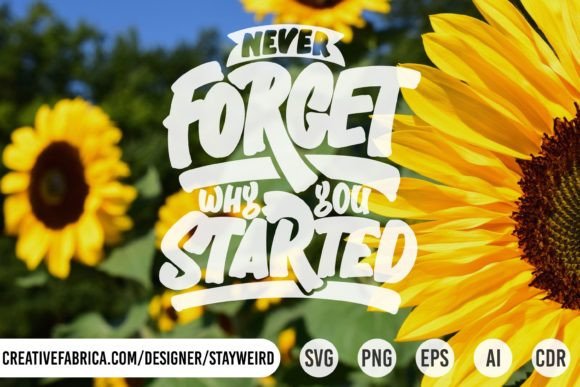
The layout of NEVER FORGET WHY YOU STARTED is clean and direct. In embroidery, simplicity is often your best friend because it translates better from screen to stitch. The typography appears bold enough to hold its shape without getting lost in the texture of the fabric, which is crucial when you are working with materials like cotton twill or fleece. There is no clutter here; the design relies on the strength of the message and the clarity of the letterforms.
When I imagine this design stitched onto a dark navy hoodie or a crisp white tote bag, the visual personality shines through as professional and inspiring. It creates a mood of determination and resilience. Unlike overly decorative scripts that can look dated or fragile after washing, this design suggests stability. It feels like something you would see on a boutique shop wall or a high-quality apron in a busy kitchen. The visual weight is balanced, making it versatile enough for both subtle accents and statement pieces.
Real-World Application: From Scrap Fabric to Finished Product
Let me walk you through a scenario I recently considered for a client project. Imagine you are preparing a custom embroidered tote bag for a local craft fair. You want something that speaks to the hard work behind the handmade goods. You pull out the NEVER FORGET WHY YOU STARTED file to test it on a scrap of heavy canvas. As you hoist the fabric, you realize immediately that the spacing allows for excellent thread coverage.
This design works exceptionally well for custom apparel, particularly sweatshirts and t-shirts where the chest area offers a flat, stable surface for stitching. However, I also see immense value in using it for baby clothes. A soft onesie featuring this quote could become a cherished keepsake for parents who want to instill values early on. The typography is clear enough to be legible even on smaller items like caps or patches, provided the hoop size is appropriate.
I also envision this design on holiday gifts. Picture a set of embroidered kitchen towels for a wedding gift, each bearing the phrase NEVER FORGET WHY YOU STARTED. It transforms a standard household item into a personalized gift that resonates with the recipient's journey. For Etsy sellers and small shop owners, this kind of imagery adds emotional depth to your listings, moving beyond generic patterns to create items that customers feel connected to.
Navigating Technical Challenges and Limitations
While the design is strong, an experienced designer knows that not every surface is created equal. There are specific situations where you need to exercise caution. If you are planning to use this on a curved surface like a baseball cap, you must ensure your digitizer has accounted for the curvature of the brim. Text on a curve can sometimes stretch or distort if the underlying structure isn't sound.
Textured fabrics present another hurdle. While this design looks great on smooth cottons and poly-blends, applying it to heavily textured materials like bouclé or rough wool might obscure the details. Similarly, thin or stretchy fabrics require careful stabilizer selection. Without proper support, the tension of the stitches could cause the fabric to pucker, ruining the clean lines of the typography. In these cases, a cutaway stabilizer is often necessary to maintain the integrity of the NEVER FORGET WHY YOU STARTED motif.
Dense stitch areas can also be tricky. If the design includes heavy fill stitches, you must check the density settings to prevent the fabric from becoming stiff or difficult to handle. This is particularly important for baby embroidery, where comfort is paramount. Additionally, if you are working with dark fabric, you will need to consider underlay stitches to ensure the thread colors pop and don't sink into the material. Always test the contrast by checking the design in black and white mockups before committing to expensive thread colors.
Impact on Brand Consistency and Customer Trust
In the realm of commercial embroidery and digital product sales, the quality of your designs directly influences customer trust. A poorly executed design can make a brand look amateurish, while a well-stitched piece elevates the perceived value of the entire product line. The NEVER FORGET WHY YOU STARTED graphic, when executed correctly, signals professionalism. It tells the buyer that attention was paid to detail, from the choice of font to the stability of the stitches.
For creative entrepreneurs selling finished products, this design serves as a powerful tool for engagement. It invites conversation. When a customer sees this phrase on a pillow cover or a sticker, they are likely to pause and reflect on their own motivations. This emotional connection drives repeat business and word-of-mouth referrals. It transforms a simple commodity into a meaningful accessory that aligns with the customer's identity.
Essential Notes for the Embroidery Designer
Before you rush to load this file into your machine, there are several practical steps you should take to ensure success. First and foremost, always test the design on scrap fabric that matches your final project material. This allows you to gauge how the threads interact with the weave and whether the stitch density needs adjustment. Check the thread color contrast carefully; what looks good on a monitor may not translate perfectly to thread, especially with metallic or variegated options.
Review the stitch density within the file. If the design is too dense, it may require trimming or reducing the number of stitches to prevent bulkiness. Confirm the recommended hoop size for the project; attempting to fit a large design into a small hoop can lead to distortion. Inspect small details closely, ensuring that any fine lines or corners are sharp and will not break during the stitching process.
It is also vital to verify the licensing terms. If you intend to sell finished items made with this design, you must confirm that your purchase includes commercial rights. Many digital embroidery files come with restrictions on how they can be used. Additionally, compare light and dark fabric backgrounds to ensure the design remains visible and effective across different colorways. Finally, ensure you are using the proper stabilizer for the specific fabric type to avoid puckering or shifting.
By approaching NEVER FORGET WHY YOU STARTED with this level of scrutiny and care, you ensure that your final product is not just a piece of cloth with thread on it, but a polished, professional asset ready for the market. Whether you are creating a unique handmade product for a craft fair or building a robust catalog for your online store, this design offers a solid foundation for your next embroidery project.